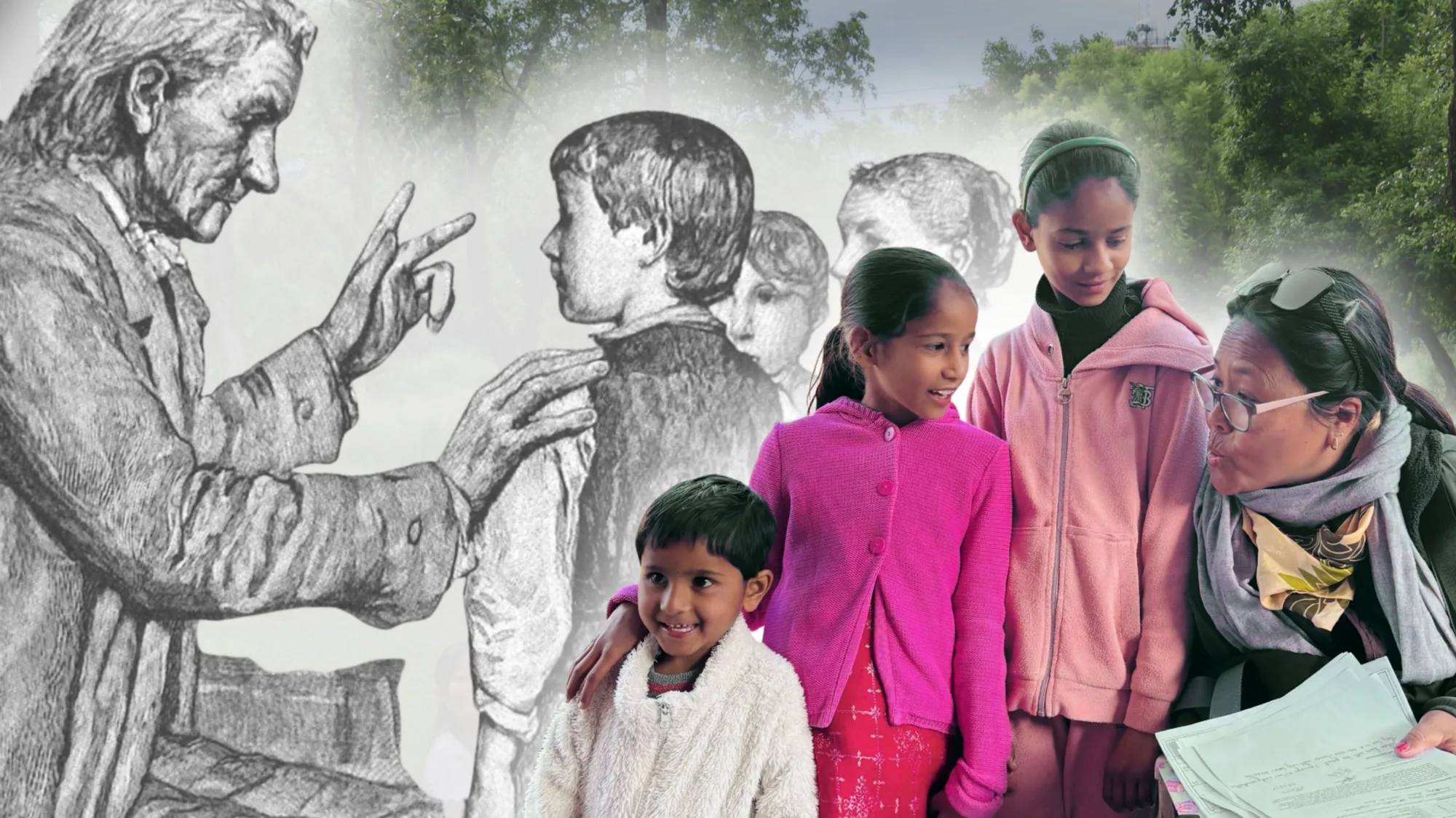
Our Director of Education Dr. Jo Nair explores:
Nature-based learning, AI and assessment tools that help young people to thrive.
Research trends in teaching and education
As Director of Education at Pestalozzi International I decided to attend the 9th World Conference on Research in Teaching and Education held in London in November – to gain greater understanding of what the current world themes in research in education are and how these relate to the education Pestalozzi International provides, inspired by the educational pedagogue Johann Heinrich Pestalozzi.
Many themes were covered by the conference but three stood out for me as particularly relevant to the transformation of education today and for being areas either seen as important by Pestalozzi way back when he developed his pedagogy in the early 19th century, or as modern approaches to which his teachings are applicable.
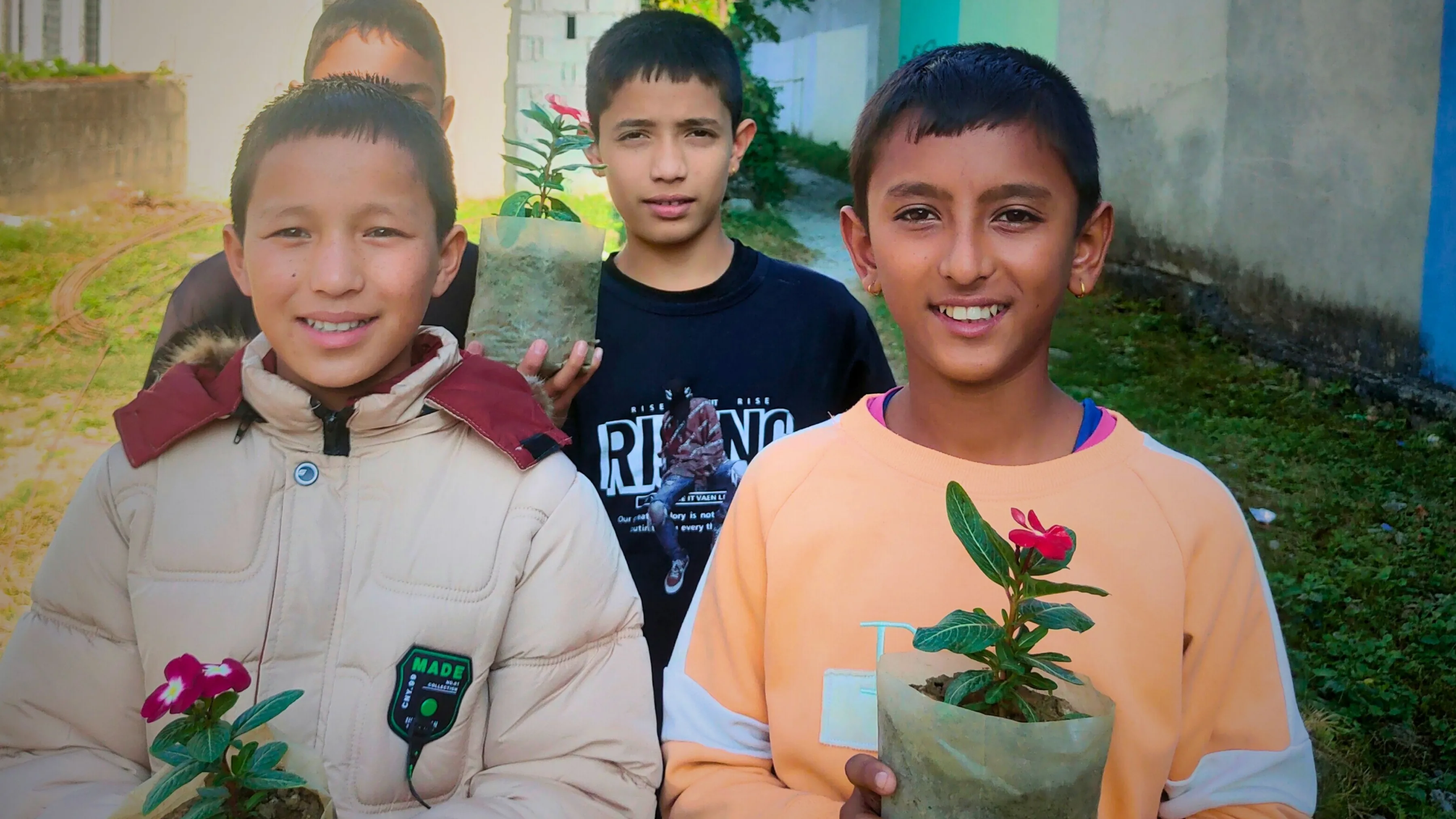
The role of nature and environmental literacy
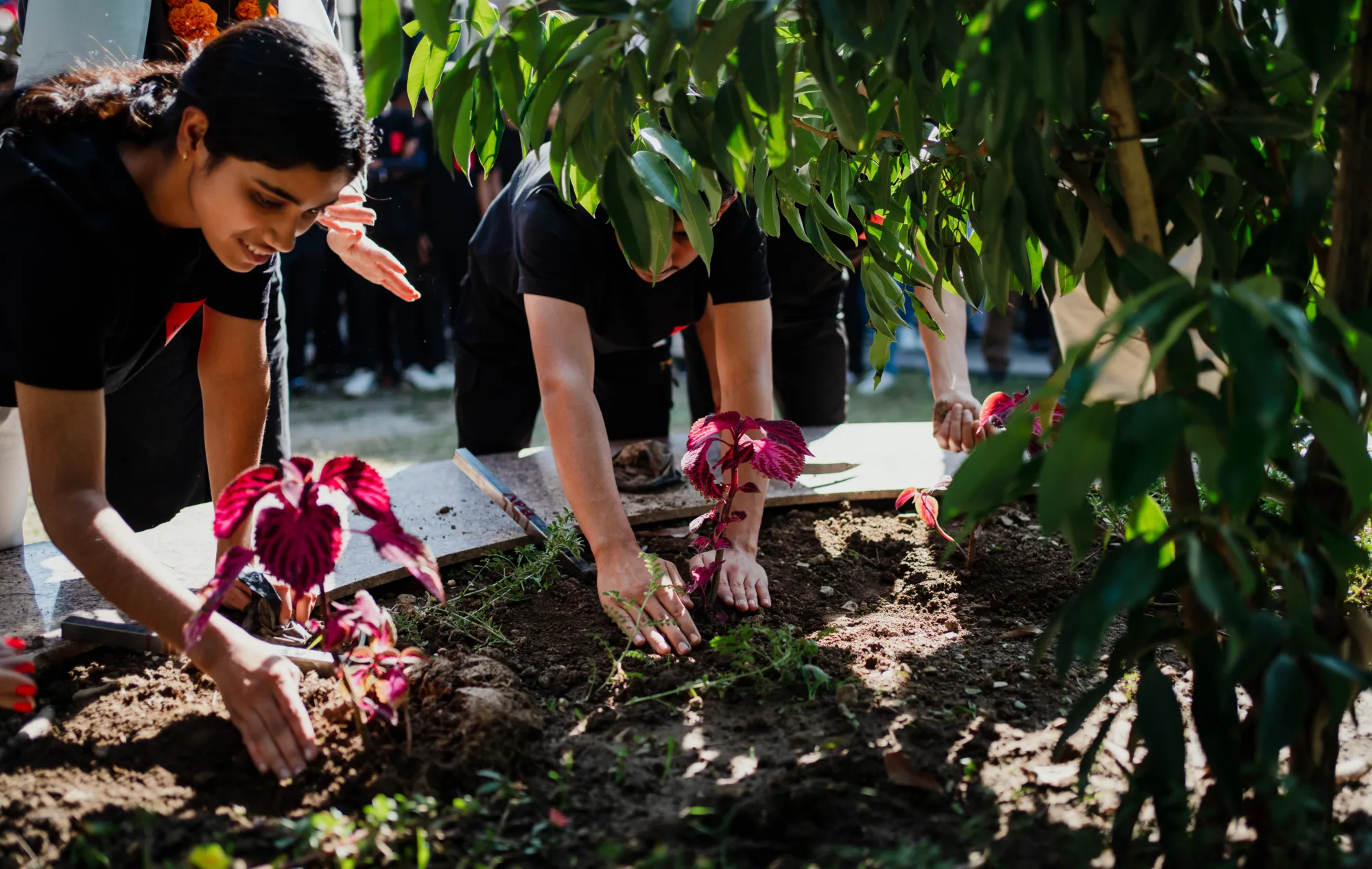
There were several presentations on research into the role of nature and environmental literacy in childhood development. For example, ‘What role does connectedness to nature play in shaping environmental identity?’ presented by Professor Dunja Andić and Dr. Melanija Mohorić from the Faculty Of Teacher Education, Rijeka, Croatia. This emphasised the role of nature in improving psychological wellbeing, including leading to lower levels of hyperactivity and behavioural and emotional difficulties, and in socialisation through improved critical thinking and problem solving.
The key role played by activity in the natural world is something we have always recognised at Pestalozzi International, where we provide as much outdoor activity as possible. In this we follow in the footsteps of Johann Heinrich Pestalozzi who was an advocate of outdoor activity and learning from nature, recognising that children learn best from the concrete reality of the world around them. He called for as much interaction with the natural world as possible: ‘lead… children out into Nature and teach them on the hilltops and valleys… Let the child realise that she [nature] is the real teacher. … If a bird should sing or an insect should crawl on a leaf, stop your conversation immediately; the bird and the insect are teaching [the child]’. He also recognised that it goes against human nature to expect a child to sit still in a classroom for the majority of the day, instead calling for outdoor activity.
Artificial Intelligence in education
As expected, a number of the presentations focused on Artificial Intelligence in education, including ‘Attitudes of teacher candidates towards the use of AI’ by Dr Habil Iván Pál Szontagh and Dr. Gabriella Jozsa of Károli Gáspár University, Hungary. Doctor Szontagh noted that AI is – or should be – transforming the role of teachers, enabling adaptive learning systems and personalised education, freeing up teacher time with assistance in lesson planning, data collection and assessment, and improving the latter with automated assessment and feedback. Rather than the emphasis being on digital knowledge it should be on digital competencies, with the teachers’ role shifting from knowledge providers to advisors on how to best guide the use of AI tools, how to ask good questions and helping students to develop ethical and critical frameworks for the use of AI.
Of course, it goes without saying that Johann Heinrich Pestalozzi knew nothing of AI when he developed his pedagogy over 200 years ago, but his ideas about the role of the teacher, and about how education should be, resonate remarkably with the shift required for the integration of AI into education. Well ahead of his time, he believed that how teachers teach is as or more important that what is taught. He showed through his work that an education of the heart, leading by example with ethics and loving kindness at the forefront, is more successful than an education that focuses on knowledge transferral, his rationale being that without the self-respect that an education rooted in loving kindness engenders, no amount of knowledge can lead to a child reaching their full potential. He also argued for an education that treats each child as a unique entity, tailored to the needs of every individual. This is a tall order for teachers with 30 plus students in their classrooms but is something AI will help to facilitate. Following Pestalozzi’s educational approach as we do makes Pestalozzi International well placed for the integration of the ethical use of AI into our teaching and learning processes.
Assessment tools in education
One of the two keynote speakers was Dr. Firth from the University of Manchester, UK presenting on ‘Employability in Education: Flexible Assessment for a Global Higher Education Future’. Dr. Firth noted how traditional assessment methods often conflict with the skills needed for modern employment, being outdated and of the industrial age. They tend to end up assessing for sameness, compliance and institutional convenience. The modern assessment methods she advocates are flexible, allowing students to choose how they demonstrate their learning, including options like varying word counts, deadlines, and assessment formats such as a song or a blog, visual, oral, written and collaborative. Such assessment methods better prepare students for the complex, global workforce and the rapidly shifting global workplace. These models assess how students think and respond to the unexpected rather than what they know; enable the student to demonstrate their full selves, their uniqueness rather than sameness; and are adaptable for work across boundaries. Such assessment methods show to students that each of their voices matter and, rather than being a test of obedience are an invitation to think and for creativity. Meanwhile they allow pedagogy to do what it should: provide the student with the start of their professional identity rather than end an academic task. Dr. Firth went on to argue, is assessment that reflects the world graduates are walking into – a preparation for life, equipping students with meta skills such as initiative, collaboration and a global perspective, contributing to flexibility and reflexiveness and enabling students to navigate ambiguity, communicate across differences and innovate.
Dr. Firth's insights align closely to the assessment tools we are developing at Pestalozzi International – all of which are inspired by the insights of Johann Heinrich Pestalozzi. He considered education useless unless it prepares students for life, for employability and for helping others. He also emphasised the unique talents of every individual and sought ways to draw those out, and he encouraged an educational approach that promotes critical inquiry, and creative individuality rather than sameness and blind obedience. Our assessment tools are just one aspect of the approach to teaching and learning we follow grounded in these Pestalozzian approaches to education.
As a modern international organisation working across continents, we take Johann Heinrich Pestalozzi’s approach and adapt it to the global context in which we work. Education through nature, learning with AI, and the use of assessment tools that equip young people with the skills they need to thrive are just a few examples of the ways in which we provide an education that is highly relevant to the needs of each of our students, their countries and to the world as a whole.